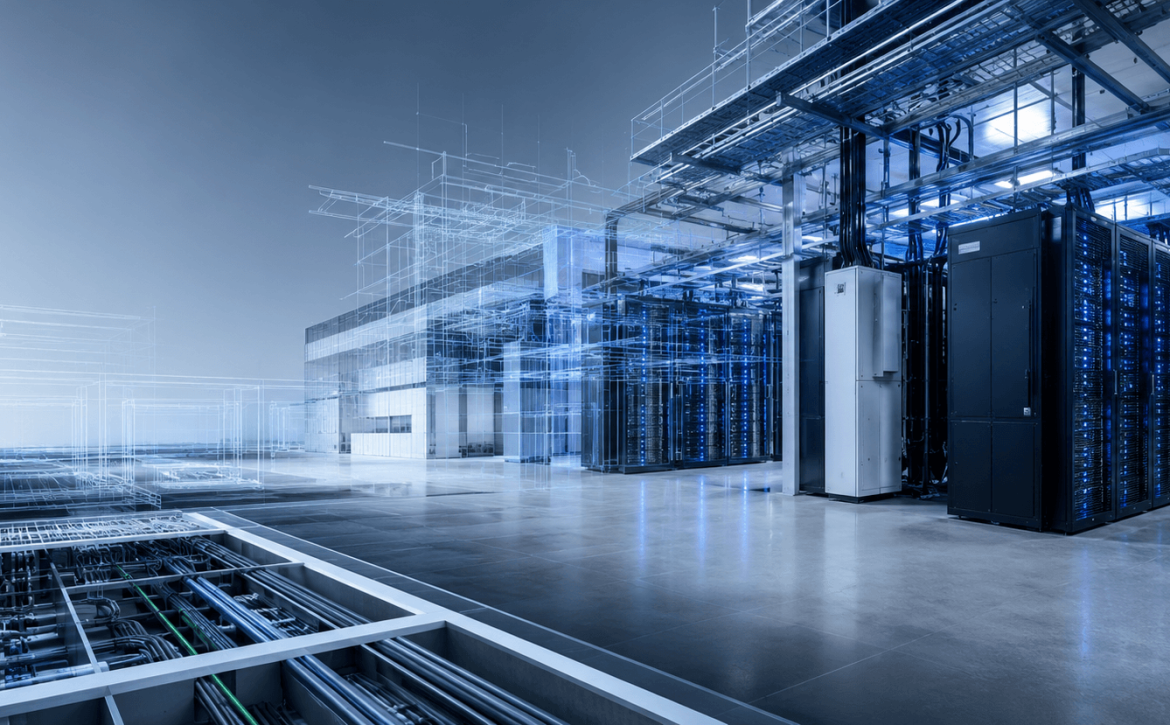
Key Factors to Consider Before Setting Up a New Data Centre

Setting up a new data centre is a major strategic investment that can influence an organisation’s technology performance, security, scalability, and business continuity for many years. A successful facility must support current applications while remaining flexible enough to accommodate future workloads such as artificial intelligence, private cloud, high-performance computing, advanced analytics, and increased data storage.

Careful planning is essential because mistakes made during the design stage can result in insufficient capacity, high operating costs, overheating, security weaknesses, and unexpected downtime. Before beginning a new data centre project, organisations should evaluate the following critical factors.

Define the Business Purpose and Workloads

The first step is to understand why the data centre is required. It may support enterprise applications, databases, virtualisation, private cloud services, GPU computing, research workloads, backup systems, or disaster recovery operations.

Each workload has different infrastructure requirements. A conventional enterprise server room may operate with moderate power and cooling capacity, while an AI data centre may require high-density GPU racks, advanced liquid cooling, high-speed storage, and low-latency networking.

Organisations should estimate the number of users, applications, servers, virtual machines, datasets, and storage requirements expected during the initial phase and over the next several years.

Select a Suitable Location

Site selection can directly affect data centre reliability and operating costs. The location should provide sufficient floor space, structural strength, reliable power availability, telecommunications connectivity, physical security, and access for equipment installation and maintenance.

Potential risks such as flooding, fire, dust, vibration, water leakage, extreme heat, and nearby industrial activity should be carefully assessed. The building should also allow future expansion of racks, electrical systems, cooling units, batteries, and cable pathways.

A detailed site survey and feasibility study can identify limitations before major investments are made.

Determine Availability and Redundancy Requirements

Organisations must define how much downtime is acceptable. Critical business services may require continuous availability, while less essential applications may tolerate limited interruptions.

The required availability level influences the design of power, cooling, networking, storage, and backup systems. Redundant UPS units, generators, network links, switches, cooling systems, and power paths can reduce single points of failure.

However, greater redundancy also increases capital and maintenance costs. The design should therefore balance availability requirements with budget and operational priorities.

Plan Power Capacity Carefully

Power infrastructure is one of the most important elements in a data centre. The total electrical load should include servers, storage systems, network equipment, security devices, cooling units, monitoring systems, lighting, and future expansion.

The facility may require utility power, electrical distribution panels, UPS systems, battery banks, generators, automatic transfer switches, rack power distribution units, surge protection, and earthing.

Power density should be evaluated at rack level. GPU and HPC systems may consume considerably more electricity than conventional servers, requiring higher-capacity circuits and intelligent rack PDUs.

Design an Efficient Cooling System

IT equipment continuously generates heat. Without effective cooling, high temperatures can reduce performance, shorten equipment life, and cause service interruptions.

Cooling capacity should be calculated according to the present and projected IT load. Depending on the data centre size and rack density, organisations may use precision air conditioning, in-row cooling, aisle containment, rear-door heat exchangers, or liquid-cooling solutions.

Hot-aisle and cold-aisle layouts help prevent hot exhaust air from mixing with cold supply air. Temperature, humidity, airflow, and water leakage should be monitored continuously at multiple points.

Build a Scalable Network Architecture

The network must provide reliable and secure communication between users, servers, storage platforms, cloud services, backup systems, and external networks.

The architecture should include appropriate switches, routers, firewalls, internet links, and redundant network paths. Production, management, storage, and backup traffic may be separated to improve security and performance.

Bandwidth should be selected according to application needs. AI, HPC, and large-scale storage systems may require 100GbE, 200GbE, 400GbE, InfiniBand, or other low-latency technologies.

Integrate Security from the Beginning

Security should be part of the original design rather than added later. Physical security may include access control, biometric authentication, surveillance cameras, visitor management, secure racks, and alarm systems.

Cybersecurity should include network segmentation, firewalls, encryption, multi-factor authentication, vulnerability management, secure remote access, and continuous monitoring.

Fire detection, fire suppression, water leakage detection, and emergency procedures are also essential for protecting equipment and personnel.

Consider Monitoring, Maintenance and Total Cost

A data centre requires continuous monitoring and regular maintenance throughout its operational life. DCIM tools can track power consumption, cooling conditions, rack utilisation, equipment health, alarms, and available capacity.

The project budget should cover more than initial construction. Electricity, software licences, maintenance contracts, technical staff, replacement parts, connectivity, and future upgrades all contribute to the total cost of ownership.

A new data centre should be designed as a long-term business platform rather than a collection of equipment. By evaluating workloads, location, capacity, availability, power, cooling, networking, security, monitoring, and operating costs, organisations can build a reliable, scalable, and future-ready facility that supports sustainable digital growth.

Read More

How to Plan and Build a Reliable Data Centre from the Ground Up

Building a reliable data centre is a complex process that requires careful planning, technical expertise, and coordination between multiple infrastructure teams. A data centre must provide secure, continuous, and efficient operation for servers, storage systems, network equipment, cloud platforms, business applications, and critical organisational data.

A successful data centre project begins with a clear understanding of present requirements and future growth. Every component—including the building, power system, cooling infrastructure, racks, cabling, networking, security, and monitoring—must work together as a unified system.

Define Business and Technical Requirements

The first step is to identify the purpose of the data centre. It may be designed to support enterprise applications, private cloud services, artificial intelligence, GPU computing, high-performance computing, backup operations, disaster recovery, or a combination of workloads.

Organisations should assess the number of users, servers, storage capacity, applications, network traffic, availability targets, security requirements, and expected expansion. AI and HPC environments require greater power density, faster networking, high-performance storage, and advanced cooling compared with conventional server rooms.

The project team should also define the acceptable level of downtime and the required redundancy for critical systems.

Conduct a Site Survey and Feasibility Study

A detailed site survey helps determine whether the selected location is suitable for data centre installation. The assessment should cover available floor space, structural strength, power availability, cooling options, equipment access, cable pathways, fire safety, and physical security.

Environmental risks such as flooding, water leakage, dust, vibration, excessive heat, and nearby industrial activity must also be considered. The site should allow safe installation, maintenance, and future infrastructure expansion.

Develop an Efficient Layout

Proper space planning improves cooling efficiency, maintenance access, and equipment organisation. The layout should identify the positions of server racks, network racks, UPS systems, batteries, electrical panels, cooling units, fire protection equipment, and monitoring systems.

Hot-aisle and cold-aisle arrangements should be used to prevent hot exhaust air from mixing with cold supply air. Adequate clearance must be maintained around racks and critical equipment to support maintenance and emergency access.

Unused rack spaces should be covered with blanking panels to improve airflow and reduce hot spots.

Design Reliable Power Infrastructure

Power availability is essential for continuous data centre operation. The electrical design should include utility power, distribution panels, UPS systems, battery backup, generators, automatic transfer switches, rack power distribution units, earthing, surge protection, and emergency shutdown facilities.

The total load calculation must include IT equipment, cooling systems, security devices, monitoring tools, lighting, and future capacity. Critical environments may require redundant power paths so equipment can continue operating if one power source fails.

Regular battery testing and generator maintenance should be included in the operational plan.

Select the Right Cooling System

Servers, storage systems, network devices, and GPU platforms generate considerable heat. Cooling capacity must be calculated according to the actual and projected IT load.

Depending on the facility, organisations may use precision air conditioning, in-row cooling, hot-aisle containment, cold-aisle containment, rear-door heat exchangers, or liquid cooling.

Temperature, humidity, airflow, and water leakage sensors should be installed throughout the data centre. Continuous environmental monitoring helps identify abnormal conditions before equipment is affected.

Implement Networking and Structured Cabling

The network architecture should provide high performance, security, redundancy, and scalability. It may include core and access switches, routers, firewalls, load balancers, internet connectivity, and separate networks for production, storage, backup, and management traffic.

Copper and fibre cabling should be organised, labelled, tested, and documented. Data cables should be properly separated from electrical cables to reduce interference and simplify troubleshooting.

Integrate Security and Monitoring

Physical security should include controlled entry, biometric or card-based access, CCTV surveillance, visitor management, secure racks, and alarm systems.

Cybersecurity measures should include firewalls, network segmentation, encryption, multi-factor authentication, vulnerability management, secure remote access, and continuous threat monitoring.

A Data Centre Infrastructure Management platform can provide centralised visibility into power consumption, temperature, equipment health, rack capacity, alarms, and environmental conditions.

Test, Commission and Document

Before the data centre becomes operational, every system must be tested. This includes UPS runtime, generator operation, power failover, cooling performance, network redundancy, fire alarms, access controls, backup systems, and disaster recovery procedures.

Complete documentation should include rack layouts, electrical diagrams, network architecture, cable schedules, equipment inventories, operating procedures, warranties, and maintenance plans.

A reliable data centre is built through detailed planning, quality infrastructure, professional installation, thorough testing, and continuous maintenance. By following a structured approach, organisations can create a secure, scalable, energy-efficient, and future-ready facility that supports long-term business growth.


Read More